Best Office Chair for Hemorrhoids: A PT's Pressure-Relief Guide (2026)
Dr. Lena Park, DPT··1 min read
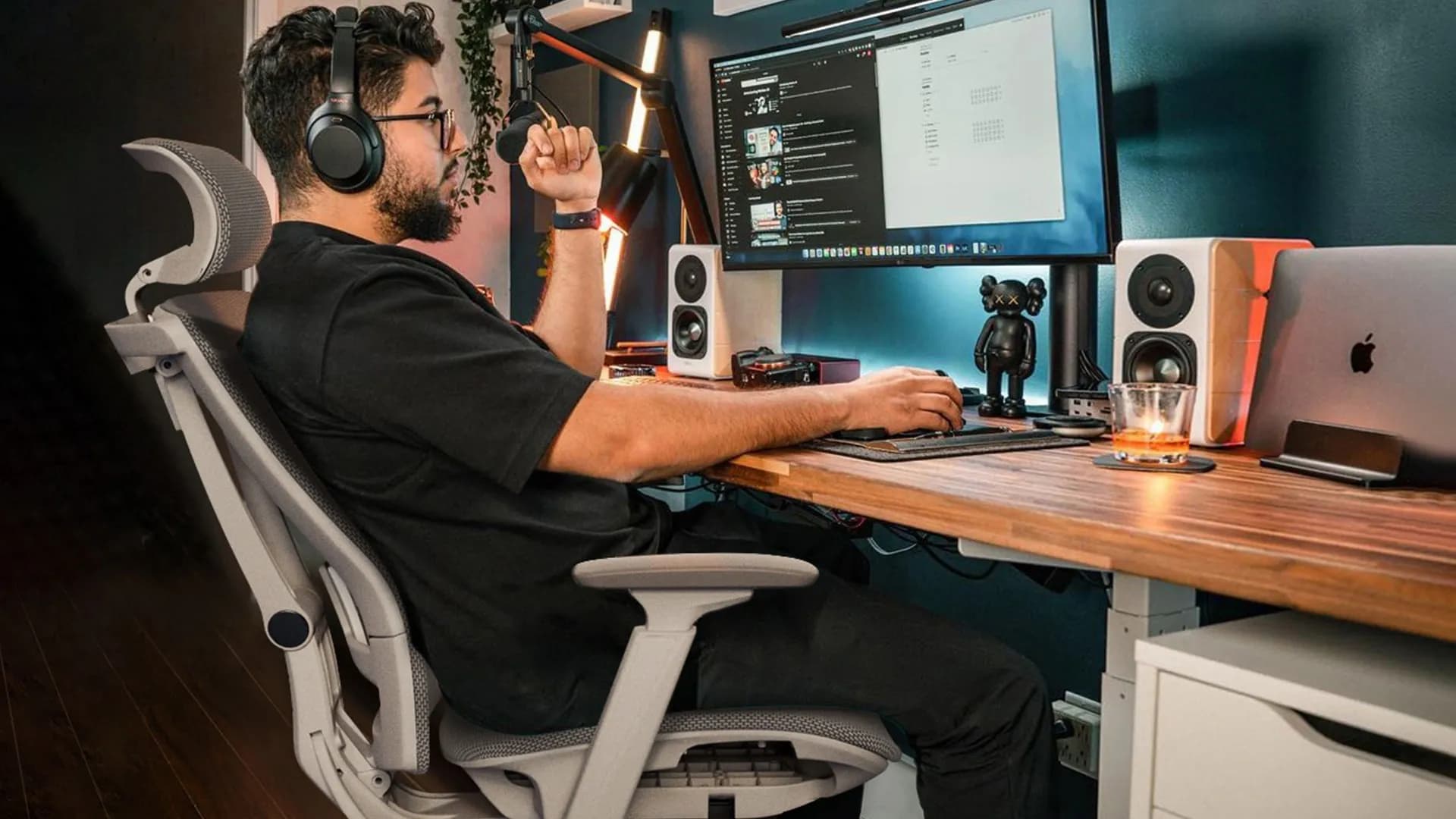
A doctor of physical therapy's framework for choosing an office chair that reduces perineal pressure during hemorrhoid flare-ups — plus the chair-and-cushion combos that work better than any single product alone.
If you're nursing a hemorrhoid flare and have to keep working a desk job, the chair under you matters less than most buying guides claim — and more than most ignore. As a physical therapist who counsels patients through return-to-work after hemorrhoid procedures, I'll tell you what my patients actually need: a chair that distributes load away from the perineum, lets the seat-pan front edge fall away from the back of the thighs, and pairs cleanly with a cutout or wedge cushion when symptoms peak.
Below is the framework I use in clinic, the four chair features that actually move the needle, and the specific chairs (plus cushion pairings) I recommend at three price tiers.
Why your chair affects hemorrhoids in the first place
Hemorrhoids are venous cushions in the anal canal that become symptomatic when intra-abdominal and pelvic-floor pressure rises. Prolonged sitting — especially on a flat, hard, or compressed seat — increases pressure on the perineum and ischial tuberosities, restricts venous return, and prolongs engorgement. The American Society of Colon & Rectal Surgeons specifically lists prolonged sitting among the modifiable risk factors.
Translation for chair shopping: you want pressure off the midline (the perineal raphe) and weight redistributed onto the sit bones, with venous return preserved. That is a very different goal from "plush comfort," and it's the reason an old gaming chair often makes hemorrhoids worse, even when it feels softer.
Four features that actually matter
- Waterfall seat-pan edge. A front edge that curves down (rather than ending squarely) prevents the seat from pressing into the back of the thighs and pinching off venous return.
- Adjustable seat depth. You want roughly two finger-widths of clearance between the seat front and the back of your knees. A pan that's too deep forces you to slouch back into the cushion — exactly the position that loads the perineum.
- Firm, contoured foam (not pillowy memory foam). Counter-intuitive but true: a too-soft seat lets the pelvis sink into a hammock and squashes the perineal tissue. You want firm support under the sit bones with relief at the midline.
- Synchronized recline with seat tilt. Reclining 110–130° during reading or calls offloads the spine and the perineum. A locked-upright chair gives you no escape from constant perineal load.
Notice what's not on this list: gel-infused memory foam, donut shape, or "orthopedic" branding. None of those have controlled evidence behind them for hemorrhoid relief.

Recommendations
Three chairs that meet the criteria
Each pick has an adjustable-depth seat (or pellicle suspension), a true waterfall edge, and a recline that unlocks past 120°.
| Product | Best for | Score | Trial | |
|---|---|---|---|---|
Herman Miller Aeron (Size B) | Best overall | 4.7/10 | ||
Steelcase Series 1 | Best mid-range | 4.5/10 | ||
Branch Ergonomic Chair | Best under $400 | 4.3/10 |
Prices are MSRP at time of writing. We do not accept manufacturer payment for placement.
Best overall: Herman Miller Aeron (Size B)
The Aeron's Pellicle suspension is the single best surface I've sat patients on during recovery. Because the mesh deflects under load, pressure peaks under the sit bones flatten out — exactly what you want. The Size B PostureFit SL kit adds adjustable sacral support, and the seat pan has a pronounced waterfall edge with adjustable seat angle (forward tilt). Recline goes well past 120° with a tilt limiter.
Caveat: the Aeron does not have adjustable seat depth. If your femurs are long (over ~19" thigh length), look at the Size C, or pick a Steelcase Leap or Series 1 instead.
Pros
- Pellicle mesh distributes load and breathes — reduces heat at the perineum
- Adjustable seat angle (forward tilt) opens the hip angle and offloads the midline
- 12-year warranty, parts available 20+ years out
Cons
- No adjustable seat depth — wrong choice for very tall users in Size B
- Premium pricing (~$1,800 new)
- Mesh edge can feel hard on bare thighs in shorts
Best mid-range: Steelcase Series 1
Around $560, the Series 1 hits all four criteria: waterfall edge, adjustable seat depth (3" of slide), firm contoured foam, and a synchronous recline that goes to ~125° with a 4-position lock. Adjustable lumbar height plus 4D arms means you can dial out the secondary postural compensations that drive people to slouch (and re-load the perineum).
I recommend it for most patients in the early return-to-desk phase because the seat-depth slider lets you tune clearance from day to day as inflammation changes.
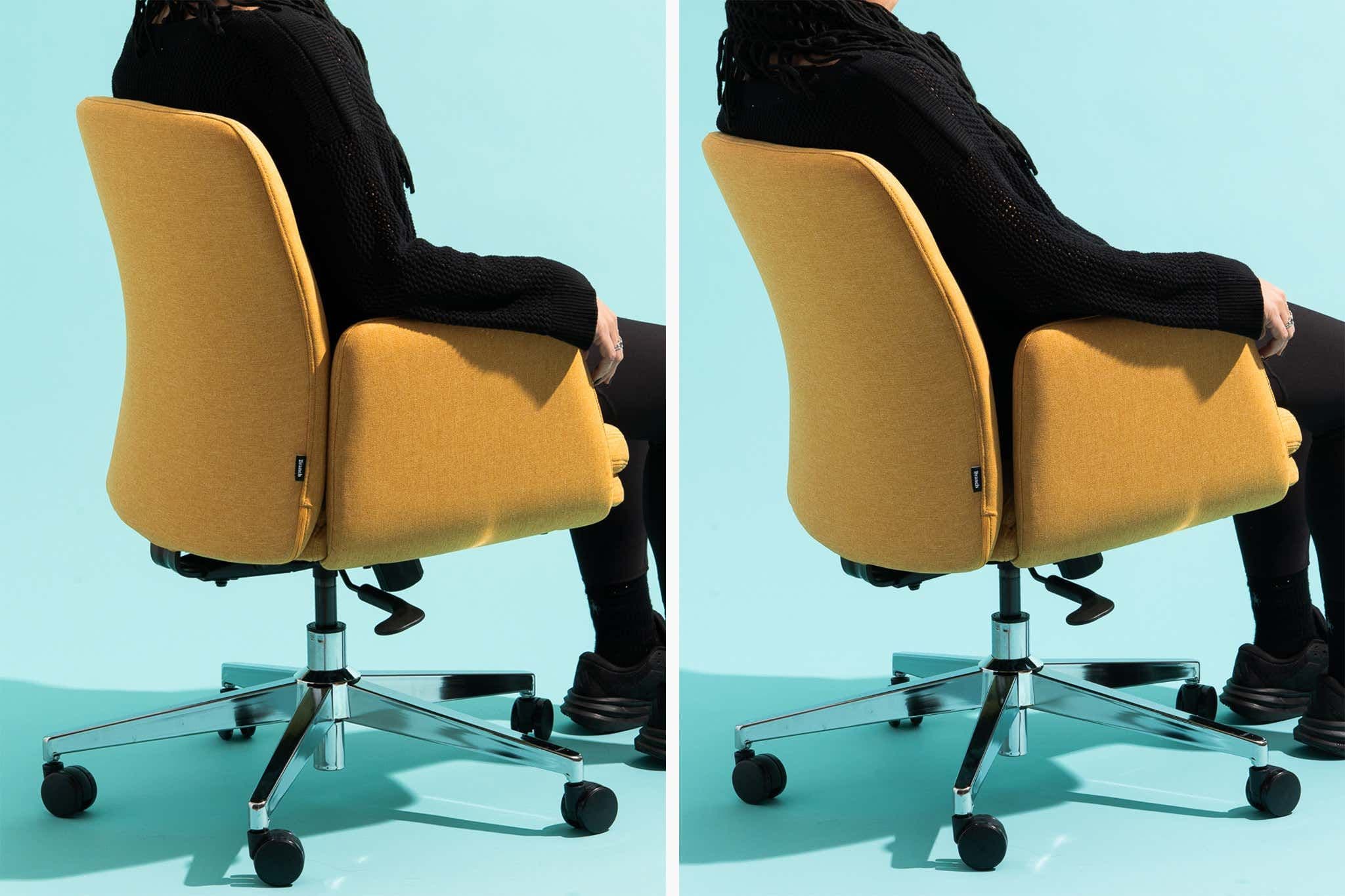
Best under $400: Branch Ergonomic Chair
Branch's Ergonomic Chair (~$329) is the cheapest chair I'd put a recovering patient in. It has a real waterfall front, adjustable seat depth, a 3-lock synchro recline to 124°, and a foam density that holds up past the 90-day mark. It is not as refined as the Steelcase — the foam compresses meaningfully after 18 months and the mesh back is stiffer — but for the price, no other sub-$400 chair I've tested has all four features at once.
Skip Amazon's house-brand chairs and the older Serta AIR / AmazonBasics Puresoft picks that still litter top-10 lists. None of them have adjustable seat depth, and the Puresoft's flat front edge is exactly what you don't want.
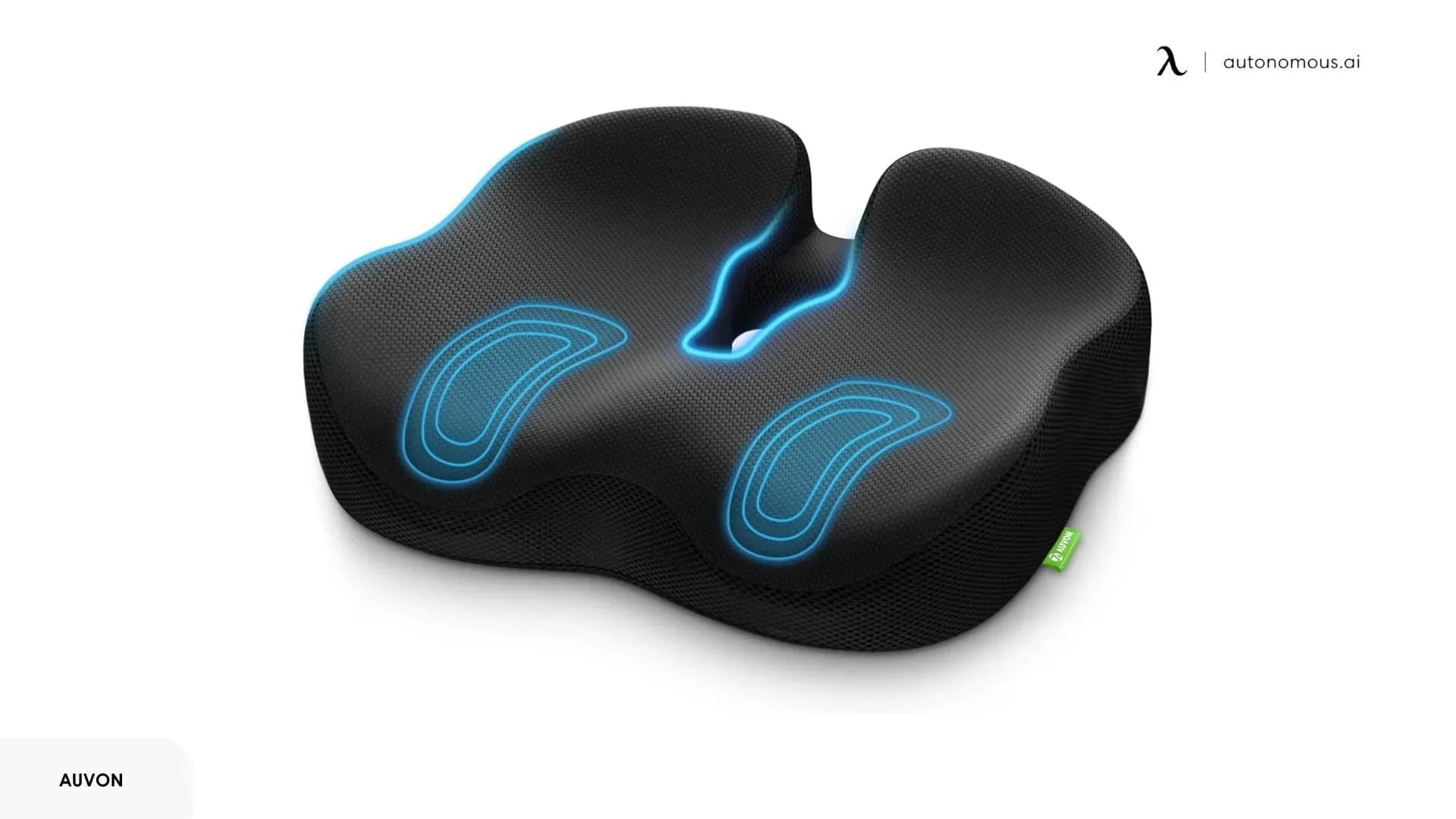
The cushion question (and why it matters more than the chair during a flare)
During an acute thrombosed external hemorrhoid or the first week post-banding, no chair on its own will be comfortable. This is when a cushion does the heavy lifting. Two shapes I prescribe:
- U-shaped or coccyx-cutout cushion. The cutout sits under the perineum and tailbone, transferring load to the sit bones. Look for medium-firm foam, ~2.5–3" thick, with a non-slip base.
- Wedge cushion (forward-tilt). Tilts the pelvis forward 8–10°, opens the hip angle, and reduces perineal load. Good when you can't tolerate a cutout pressing on inflamed tissue.
Skip pure donut rings — they actually increase venous congestion in surrounding tissue. The orthopedic literature has been clear on this for years; the donut is a folk remedy that survived the internet.
Frequently asked questions
Is a hard or soft chair better for hemorrhoids?
Neither extreme. A rock-hard chair concentrates pressure on the sit bones and perineum; a too-soft chair lets the pelvis sink into a hammock that compresses perineal tissue. The right answer is firm contoured foam or tensioned mesh that supports the sit bones while the seat edge falls away from the thighs.
How should I sit at my desk if I have hemorrhoids?
Hips slightly higher than knees (open hip angle, ~95–105°), feet flat on the floor or a footrest, lumbar support engaged, and at least one 30-second stand-up every 20–30 minutes. Recline to 110–125° during reading or calls — staying bolt-upright is what concentrates perineal load.
Do donut cushions help hemorrhoids?
No, and they can make things worse. The ring shape suspends the perineum but compresses the surrounding venous return, increasing congestion. Use a coccyx-cutout cushion or a forward-tilt wedge instead.
How long until I can sit normally after a hemorrhoid procedure?
Most rubber-band ligation patients can return to a properly set up chair within 48–72 hours, often with a cushion. Excisional hemorrhoidectomy is more involved — expect 1–3 weeks of cushion-dependent sitting and shorter sessions. Always follow your surgeon's specific guidance.
Is a kneeling chair or saddle stool a good idea?
Sometimes. A saddle stool opens the hip angle aggressively and offloads the perineum, which can feel great during a flare. The downside is core fatigue: most people can't tolerate one for an 8-hour day. I recommend it as a 2–4 hour-per-day rotation, not a full-time replacement.
Set up your chair correctly first
Even the best chair will load the perineum if it's set up wrong. Our 5-minute setup walkthrough covers seat height, depth, recline limit, and lumbar position.
Written by
Dr. Lena Park, DPTDoctor of Physical Therapy and lead reviewer at Ergoprise. Specializes in workplace posture, cervical-spine load, and the biomechanics of seated work.
Share:
Related Posts
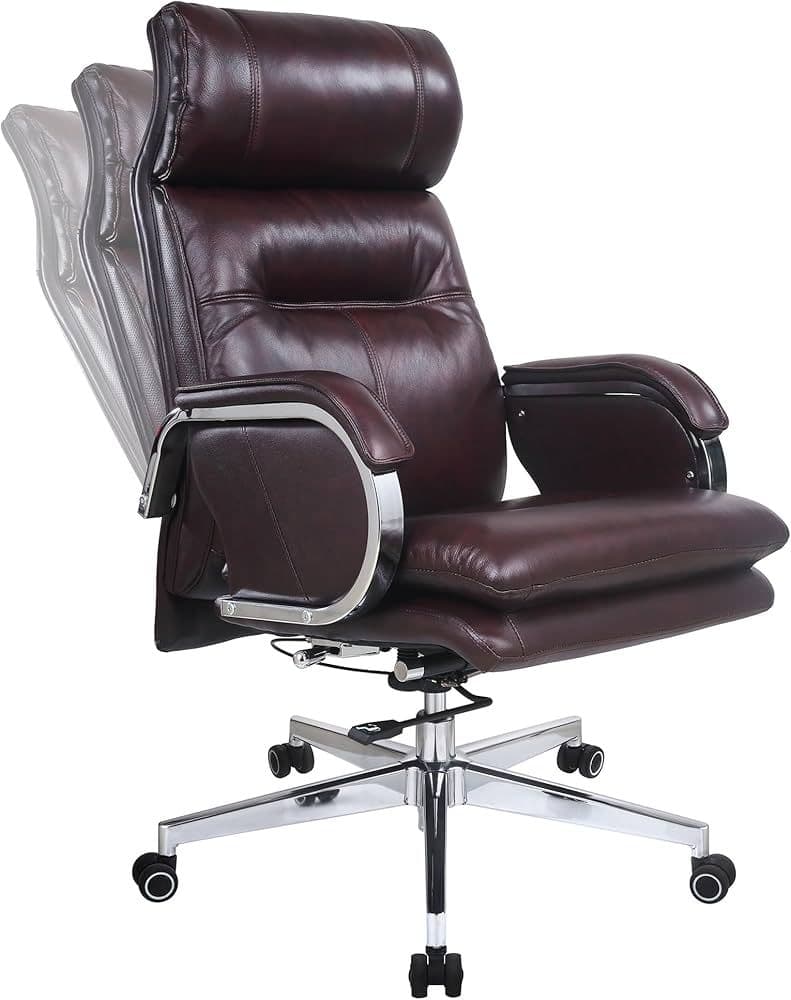
5 Best Genuine Leather Office Chairs in 2026 (Top-Grain & Full-Grain Only)
A clinical take on real leather office chairs — top-grain and full-grain only, ranked by ergonomic frame, leather grade, and 10-year durability.
Best Office Chairs for Coccyx Pain: An OT's 2026 Buying Guide
If sitting flares your tailbone, the chair matters more than the cushion on top of it. Here's the OT-led shortlist of office chairs that actually unload the coccyx.
The Best Office Chairs for Long Hours, Tested by an Ergonomist
We sat in seven ergonomic chairs for 8+ hour workdays. Here is what survived — from a Steelcase Gesture down to a $480 sleeper pick.