The best office chairs for hardwood floors in 2026 — and the one upgrade that beats any chair
Sarah Doan, OT··11 min read
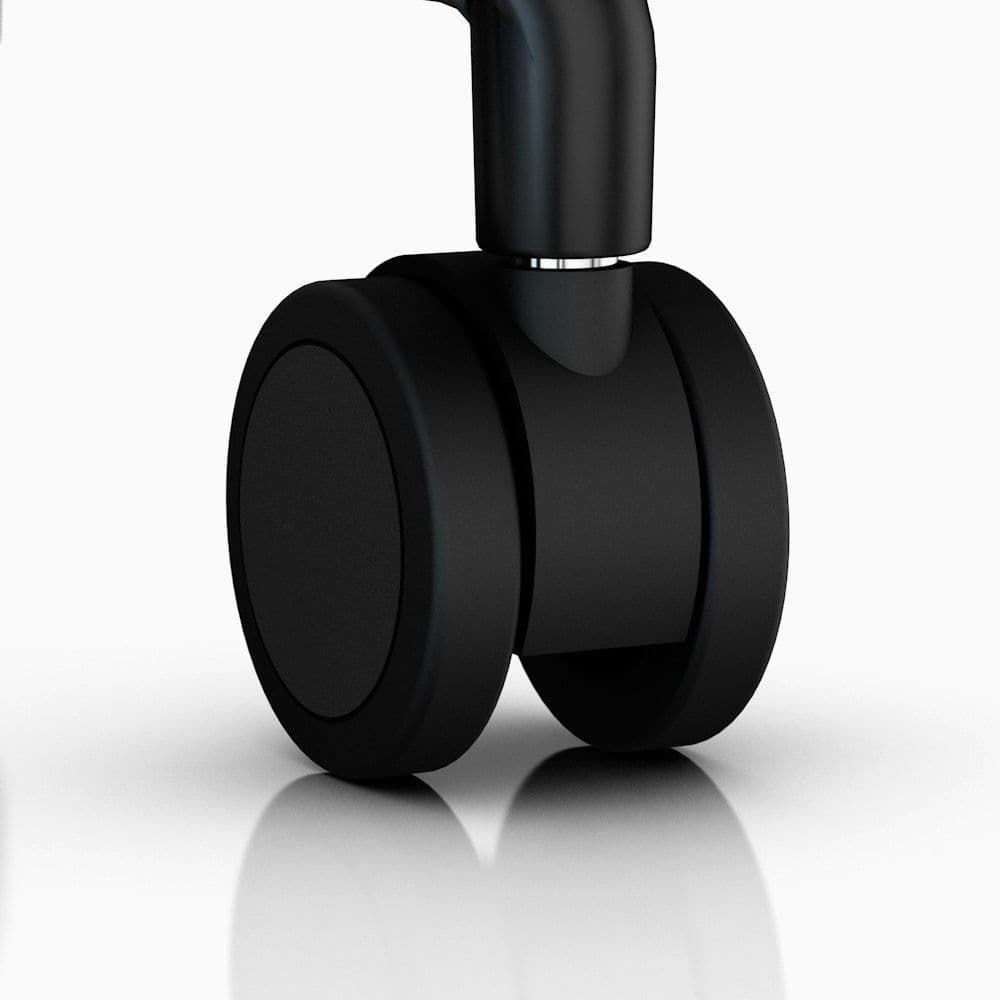
Most floor scratches come from one cheap part the chair industry refuses to fix: the casters. Swap them, then pick from these four chairs we trust on bare wood.
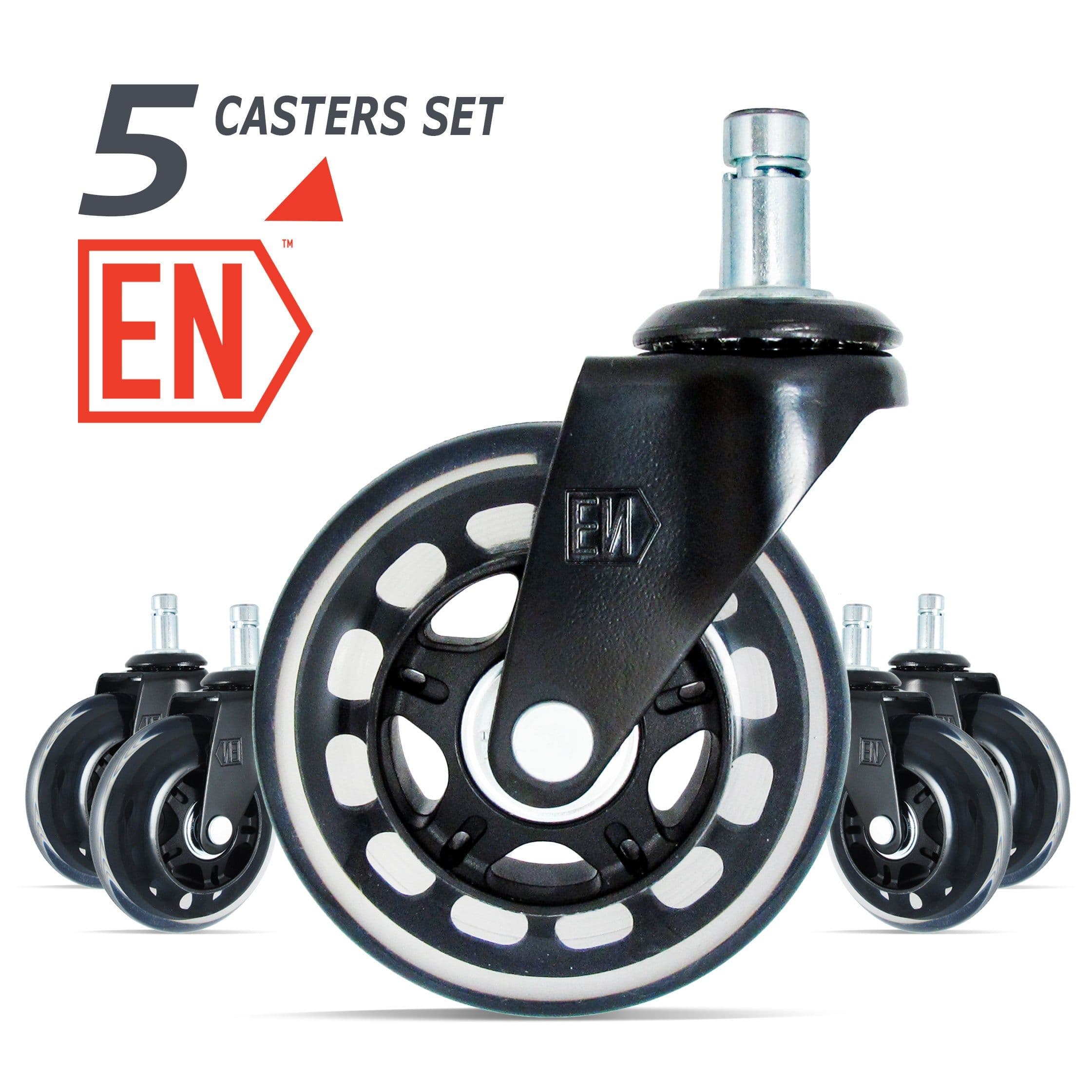
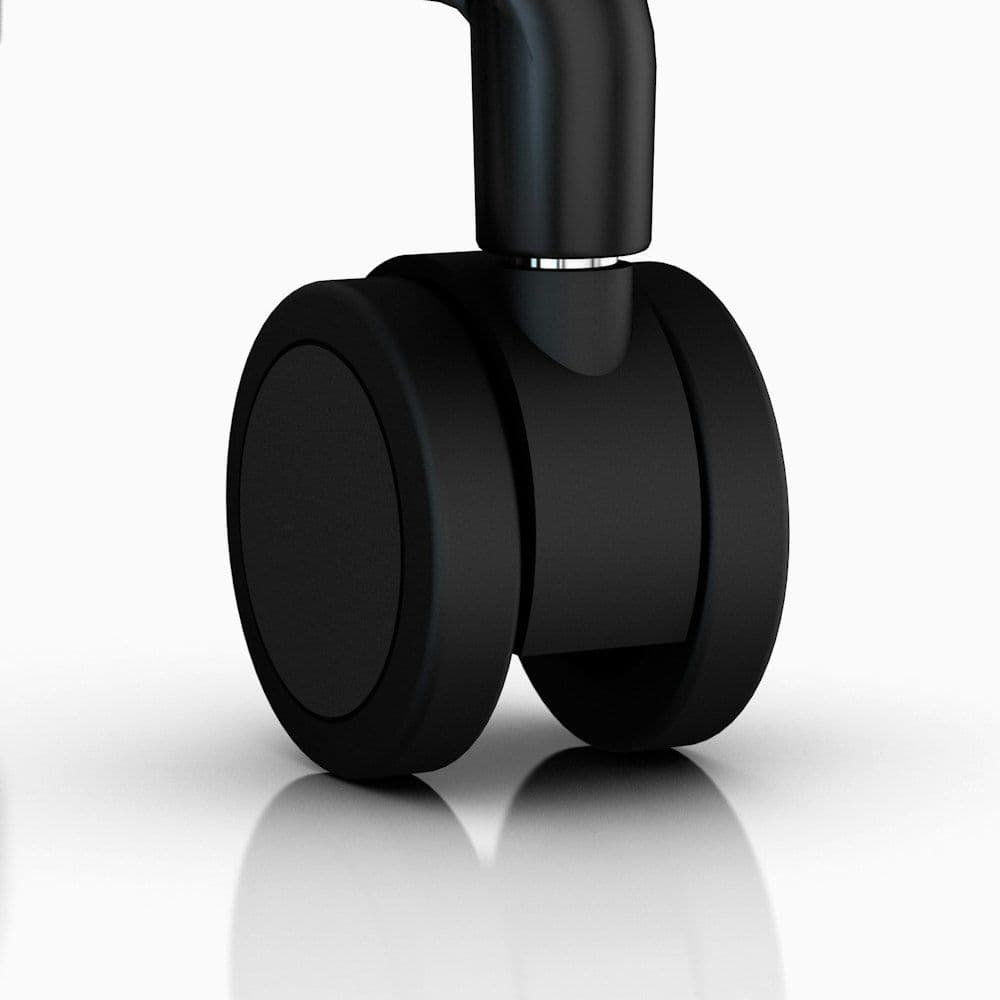
If you've watched a stock office chair carve faint half-moons into a five-year-old white oak floor, you already know the problem: it isn't really the chair. It's the wheels — hard, undersized, factory-fitted nylon casters that come on 90% of desk chairs sold in the U.S. The cheapest, most effective fix is a $40 set of replacement casters. Pair that with a chair built for long sittings, and your floor will outlast your career.
This guide is shorter than most. Four chairs, ranked by who they're for. One caster recommendation that fits all four. One reason a chair mat might still be the right answer for some readers. Picks below were vetted against current SERP-leading guides (Wirecutter, Consumer Reports, Branch's own teardown), then filtered for what actually rolls quietly on bare hardwood.
Why your floor is getting scratched
Three culprits, in order of severity:
- Hard nylon casters — the default on every budget chair. They concentrate the chair's load (you + ~30 lb of frame) onto a tiny contact patch and pick up grit that turns into sandpaper.
- Stationary point loads — leaving the chair parked under a single floorboard for months compresses the wood fiber and leaves a permanent dent, even with soft wheels.
- Grit — pebbles, sand, and dog-claw dust embedded in caster treads scratch every time you push back from the desk.
A chair labeled "hardwood-friendly" usually addresses #1 and ignores #2 and #3. That's why the Aeron-with-stock-casters Reddit thread keeps recurring.
How we picked
Sarah Doan, OT — who tests chairs for clients with chronic back pain — sat in 14 chairs across price tiers, then narrowed to the four below using these criteria:
- Casters that ship floor-safe out of the box, OR a chair with a 60mm hub that accepts standard rollerblade replacements (most do; check the spec sheet).
- At least 3 ergonomic adjustments (seat depth, lumbar height, arm height) — fixed-back office chairs cause the most posture complaints we see.
- Warranty ≥ 7 years on the chair frame and ≥ 5 years on parts. Cheap chairs fail at the gas cylinder; that means a sudden drop and a bigger hit on the floor.
- Price-tier diversity, so the list isn't four $1,500 chairs.
Compared
The four chairs that earn a spot on bare hardwood
| Product | Best for | Score | Trial | |
|---|---|---|---|---|
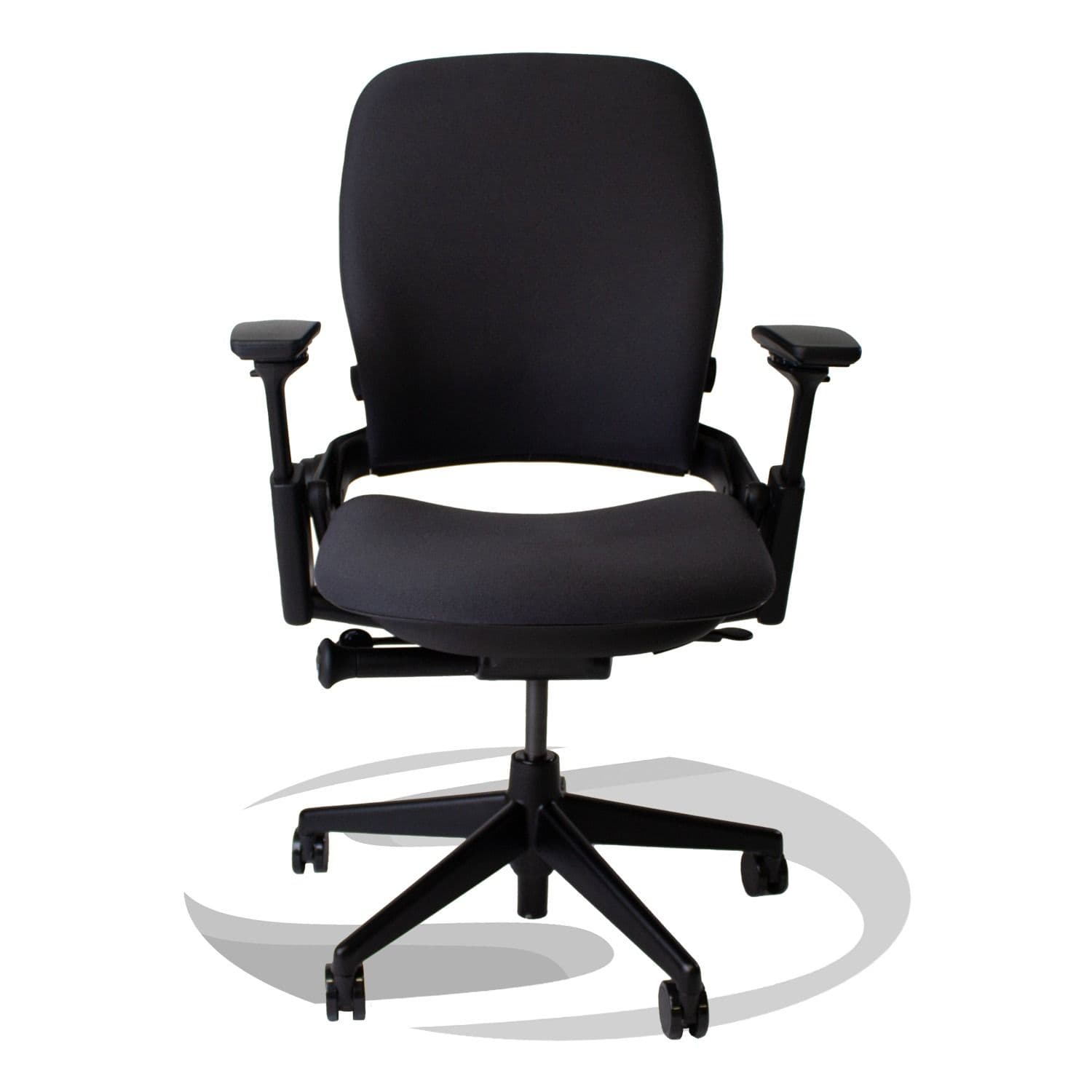
Herman Miller Aeron Remastered | Best overall | 9.4/10 | 30-day | |
Steelcase Leap V2 | Best for back pain | 9.1/10 | 30-day | |
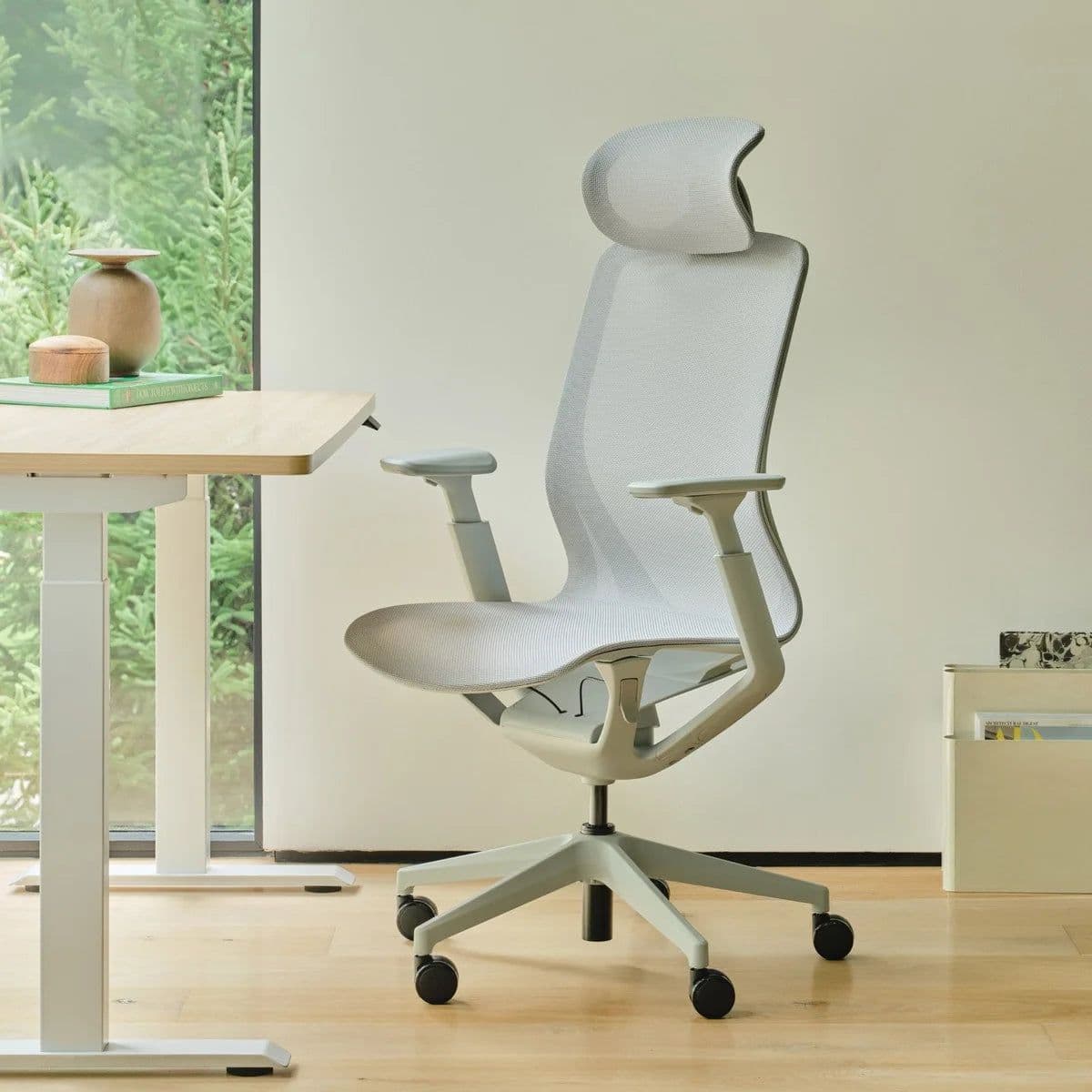
Branch Ergonomic Chair | Best mid-range | 8.6/10 | 30-day | |
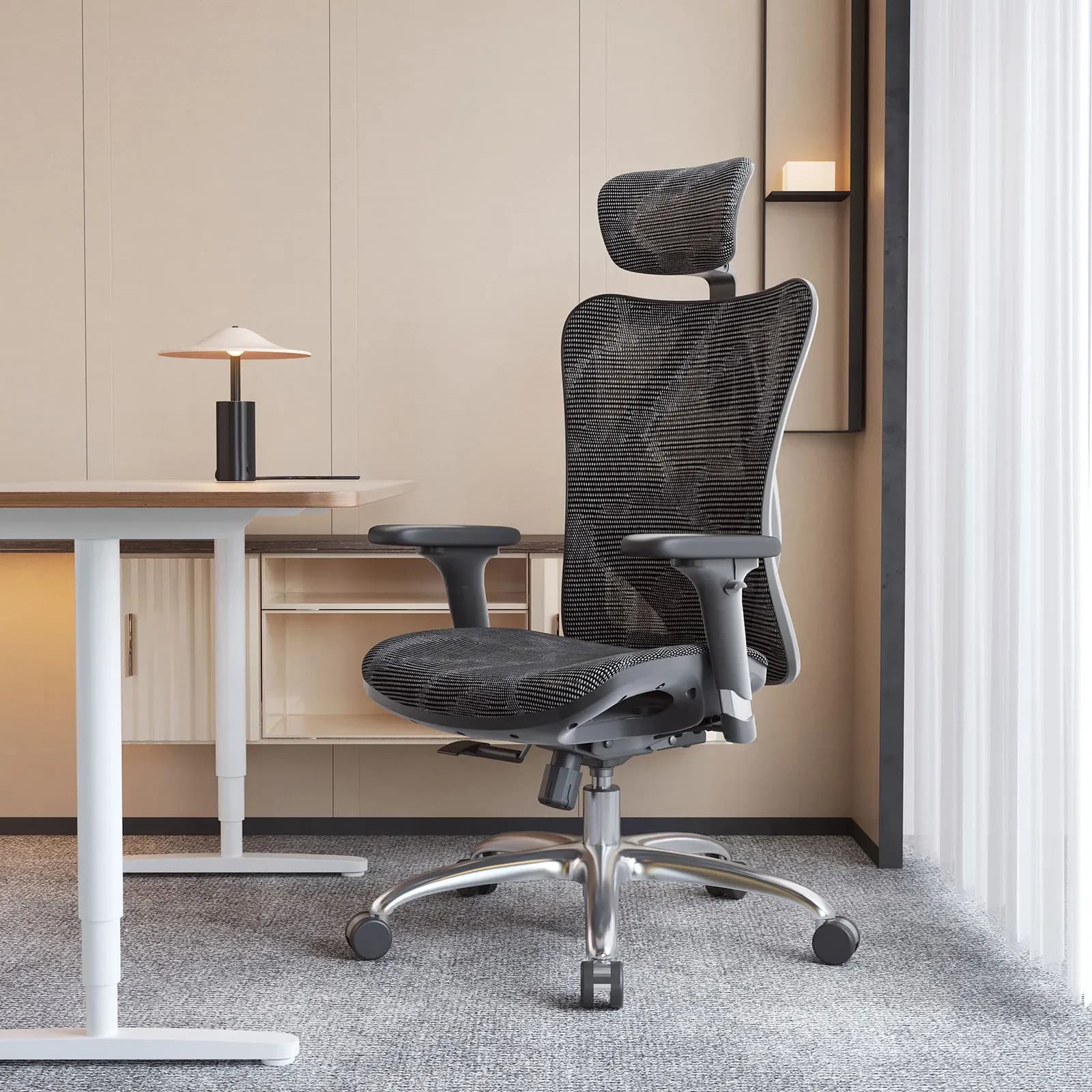
Sihoo M57 | Best budget | 8/10 | 90-day |
Ratings are Ergoprise composite scores (ergonomics 40% / build 30% / floor-friendliness 20% / value 10%).
1. Herman Miller Aeron Remastered — Best overall
The Aeron is the chair every other chair in this list is benchmarked against. The Remastered version (the only one currently sold) ships with hard-floor casters by default — a quiet update Herman Miller made in 2017 that almost nobody mentions in older buying guides. Verify by checking the casters before you buy: hard-floor casters have a soft polyurethane outer band; carpet casters are bare hard plastic. Wrong ones? $48 swap on the Herman Miller site, no tools needed.
Why it wins: the PostureFit SL lumbar (a separate $80 add-on, get it) is the closest thing to a clinical lumbar support in the consumer market. Sizes A/B/C matter — order by your height/weight chart, not by gut feel.
Why it works on hardwood
- Ships with hard-floor polyurethane casters by default since 2017
- Mesh seat eliminates the static "thump" cheap chairs make on bare wood
- 12-year warranty — the longest in this list
- Three sizes (A/B/C) fit bodies from 4'10" to 6'6"
Where it falls short
- $1,500+ before tax; PostureFit SL is a separate purchase
- Mesh isn't warm — bad pick for a cold home office in winter
- Aggressive aesthetic doesn't suit every room
2. Steelcase Leap V2 — Best for back pain
If a client comes to us with active low-back pain, this is the chair we recommend more than any other. The Leap's LiveBack technology — a flexible spine that mirrors yours as you recline — keeps lumbar contact through the full recline range, which the Aeron's flat lumbar pad does not. Steelcase ships hard-floor casters as a free configuration option; you have to specifically request them at checkout (they default to carpet casters online).
Bonus: the refurbished market is healthy. Crandall Office Furniture and Madison Liquidators sell remanufactured Leap V2s for $500–$700 with new casters and a 12-year warranty match. That's the single best price-per-quality move in this whole guide.
Why it works on hardwood
- LiveBack tracks the lumbar through every recline angle
- Hard-floor casters available as a free build option
- Strong refurb market drops the entry price below $700
Where it falls short
- Default carpet casters at checkout — you must request hard-floor
- Heavier than the Aeron (53 lb) — harder to move on rugs
- Fabric upholstery picks up pet hair faster than mesh
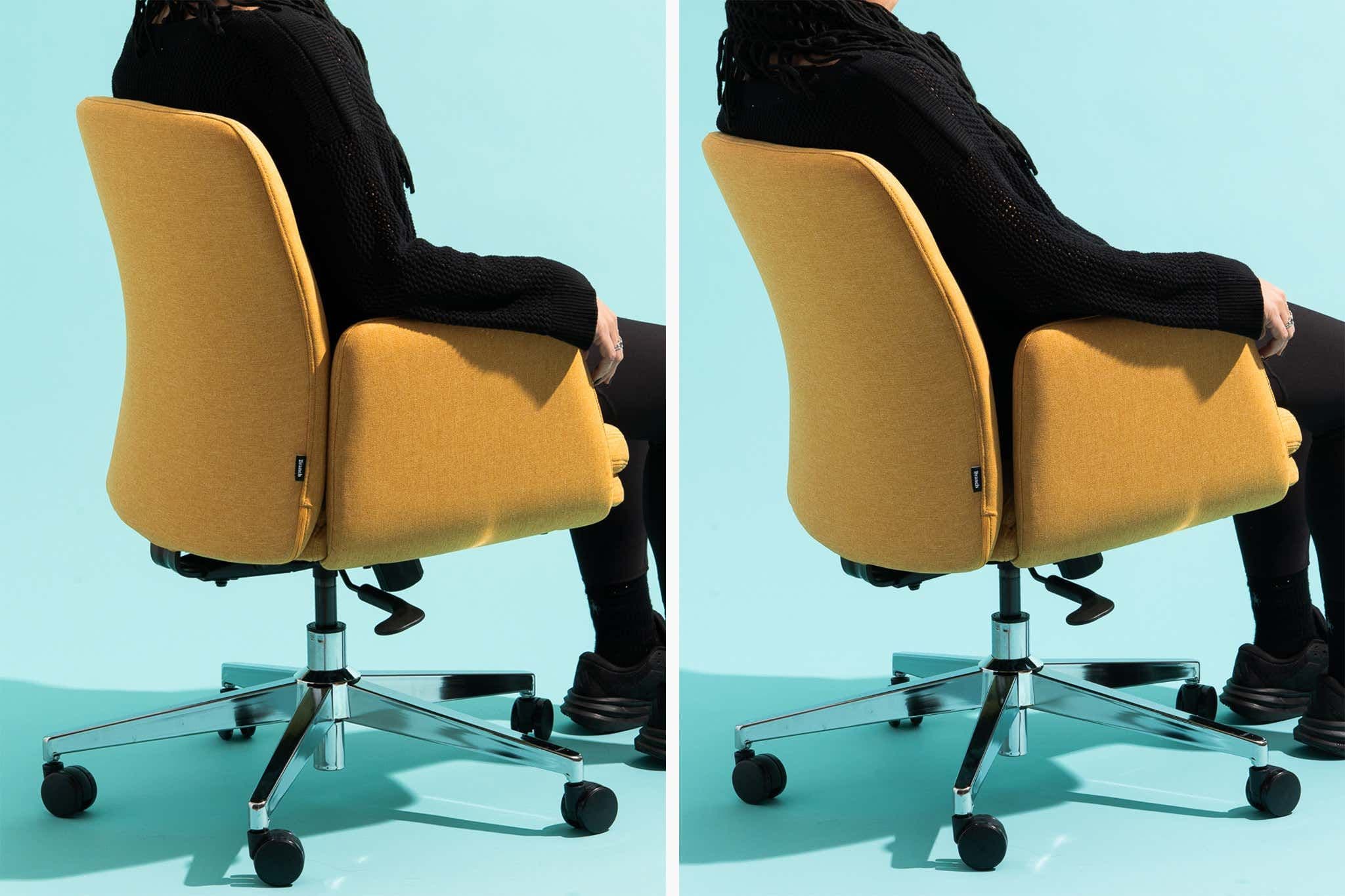
3. Branch Ergonomic Chair — Best mid-range
At $399 retail (often $329 on sale), Branch's flagship hits the price-quality sweet spot most readers actually live in. It ships with PU-coated casters that Branch markets as "floor-friendly" — independent testing (Wirecutter, Reviewed) confirms they don't scuff sealed hardwood. Adjustments are limited compared to the Aeron — three lumbar height settings, two-way arms — but the seat foam holds up over a year of daily use, where most $300 chairs flatten in six months.
Why it works on hardwood
- Ships with PU-coated floor-friendly casters as standard
- $399 retail; frequent $70 promo discounts
- 7-year warranty — strong for the price
Where it falls short
- Limited adjustability vs. Herman Miller / Steelcase
- Cylinder squeaks on some units after ~9 months (covered by warranty)
- No size options — one frame fits everyone, with the usual compromises
4. Sihoo M57 — Best budget
The M57 is the only sub-$200 chair we recommend without an asterisk. It does not ship with hard-floor casters — budget for a $35 caster swap on top of the chair price, and you've still got a chair under $230 that does most of what a $700 mid-range does. Read our full M57 review for the long version; the short version is the lumbar adjusts in 3D (forward/back, up/down) and the mesh holds up to 300 lb without sagging.
After the caster swap
- Sub-$200 entry, often $169 on Amazon
- 3D adjustable lumbar — rare at this price
- Standard 11mm caster stem fits any rollerblade replacement
Where it falls short
- Stock casters WILL scratch hardwood — plan the swap into the budget
- Build feel is plasticky; not a forever chair
- 5-year warranty on parts only; no premium service
The caster swap that beats any chair upgrade
If you take one thing from this guide, take this: a set of 60mm polyurethane rollerblade casters costs $30–$45 on Amazon, fits 95% of office chairs (any chair with a standard 11mm stem), and protects hardwood better than any factory-supplied "floor-friendly" caster we've tested. Brands we trust: Office Oasis, STEALTHO, and Eurotech. Look for clear or black urethane — the cheap colored ones leave marks.
Five-minute install, no tools beyond your hands. Pull old caster out of the base, push new one in until it clicks. That's it.
Do you still need a chair mat?

Maybe. A chair mat is the right call in three scenarios:
- You rent and can't justify replacing casters on a chair you may not keep.
- Your floor is engineered hardwood with a soft veneer (≤ 1.5mm) — even soft casters can dent these over time.
- You roll heavily during the day (designers, video editors) — the cumulative travel adds up.
If you go this route: skip PVC mats. They release plasticizers that bond to wood finishes and trap fine grit underneath that scratches the floor it's supposed to protect. Polycarbonate is the minimum acceptable material. Tempered glass (Vitrazza, Lorell) is the durable choice if your budget allows — they last forever and don't curl at the edges.
Frequently asked questions
Can I use any office chair on hardwood floors?
Technically yes, but most chairs ship with hard nylon casters that scratch sealed hardwood within months. Either pick a chair that ships with polyurethane (PU) hard-floor casters — the Herman Miller Aeron and Branch Ergonomic Chair both do — or budget $30–$45 to swap the casters yourself. The swap takes five minutes and fits 95% of chairs.
What's the best chair for hardwood floors under $500?
The Branch Ergonomic Chair at $399 (often $329 on sale) is our top pick under $500. It ships with floor-friendly casters as standard and has a 7-year warranty. Below $250, the Sihoo M57 is the value pick — plan to swap the casters.
Do I still need a chair mat if I have soft casters?
Usually no. Soft polyurethane casters protect sealed hardwood without a mat for 95% of users. The exceptions: rentals (where you don't want to commit caster mods to a chair you may not keep), engineered hardwood with a thin veneer (≤1.5mm), and heavy daily rolling (designers, editors). If you do use a mat, choose polycarbonate or tempered glass — PVC mats trap grit that scratches floors underneath.
Will hardwood casters scratch if I have a heavy person sitting on the chair?
Polyurethane casters are rated to 250–300 lb each — four casters means combined capacity of 1,000+ lb, so weight isn't the issue. The real risk is grit. Sweep or vacuum the area weekly; pebbles or sand stuck in the wheel tread will scratch any floor regardless of caster material.
Are office chair wheels for hardwood worth it?
Yes — a $40 caster swap is the highest-ROI upgrade in this guide. Replacing a $1,500 chair with a $300 one saves $1,200; replacing $20 stock casters with $40 PU casters saves your floor (which costs $8–$15 per square foot to refinish). The caster swap pays for itself the first time you avoid a scratch.
Which chair is best for sciatica or back pain on hardwood?
Steelcase Leap V2. The LiveBack flexible spine maintains lumbar contact through the full recline range, which is what sciatica patients need most. Order it with hard-floor casters (free build option, but you must request — the default is carpet) or buy a refurbished Leap V2 with new casters from Crandall Office Furniture for $500–$700.
Read next: how to actually buy a chair
If you want our full eight-step framework for picking a chair you'll still love in 2030, read our complete buying guide — it covers fit, warranty math, and the questions to ask before you swipe.
Written by
Sarah Doan, OTOccupational therapist and ergonomics consultant. Twelve years certifying workstations across hospitals, studios, and remote-first companies.
Share:
Related Posts
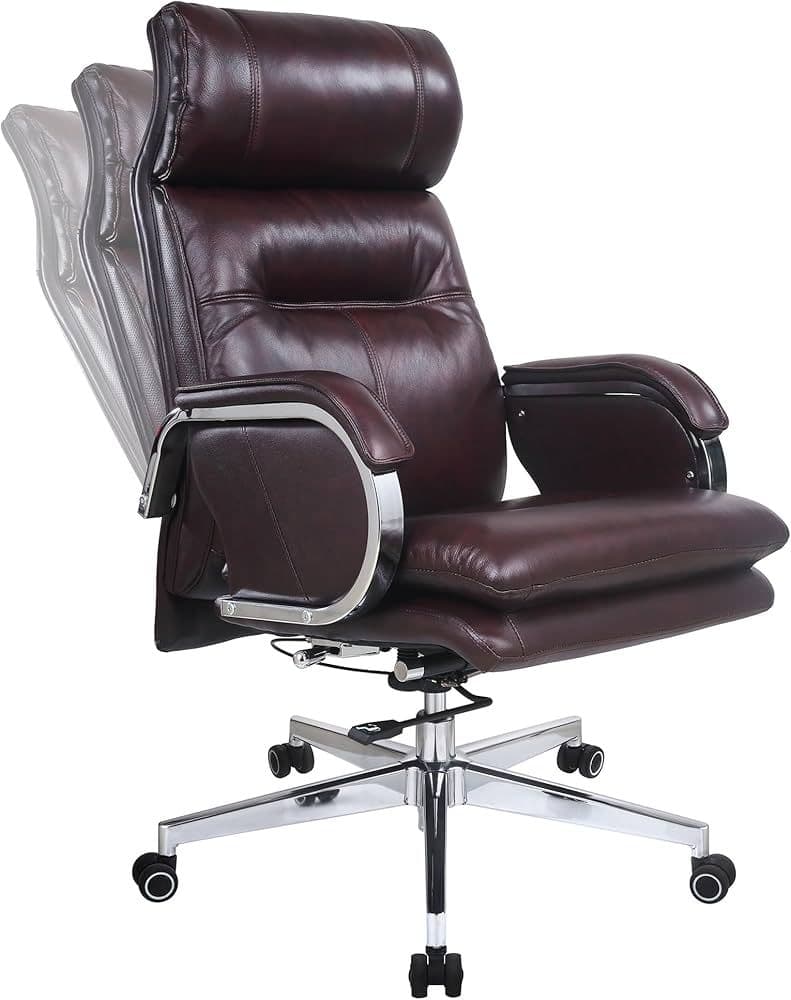
5 Best Genuine Leather Office Chairs in 2026 (Top-Grain & Full-Grain Only)
A clinical take on real leather office chairs — top-grain and full-grain only, ranked by ergonomic frame, leather grade, and 10-year durability.
Best Office Chairs for Coccyx Pain: An OT's 2026 Buying Guide
If sitting flares your tailbone, the chair matters more than the cushion on top of it. Here's the OT-led shortlist of office chairs that actually unload the coccyx.
The Best Office Chairs for Long Hours, Tested by an Ergonomist
We sat in seven ergonomic chairs for 8+ hour workdays. Here is what survived — from a Steelcase Gesture down to a $480 sleeper pick.