Best Office Chair for Buttock Pain: 6 Picks That Actually Reduce Sit-Bone Pressure (2026)
Dr. Lena Park, DPT··1 min read
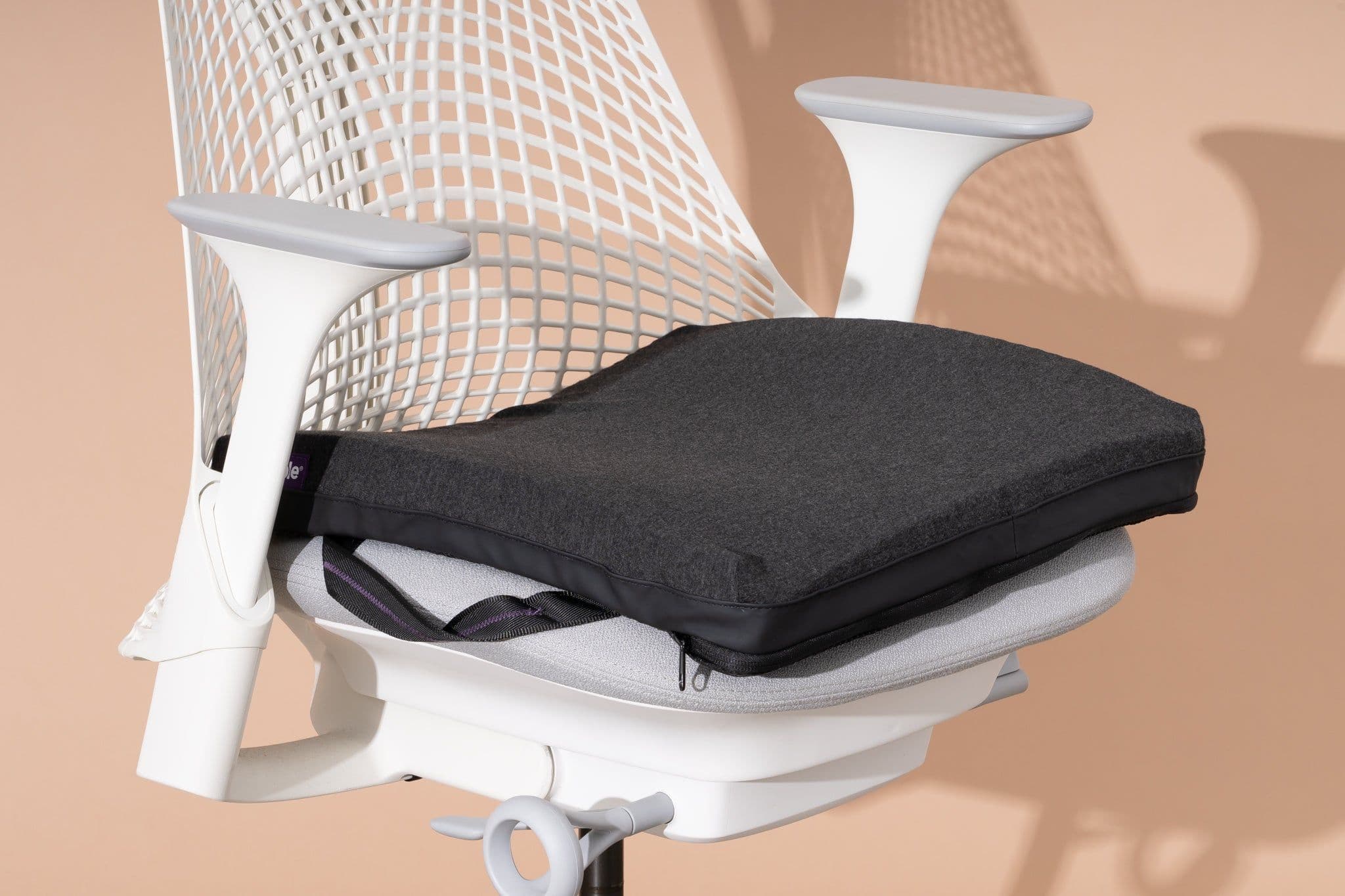
If your glutes ache after a few hours of sitting, the chair is usually the problem. We rank six chairs that real ergonomists and SERP-leading testers recommend for sit-bone, piriformis, and tailbone pressure.
Buttock pain at the desk is rarely a glute problem. It is a pressure problem: a poorly shaped seat concentrates body weight onto the ischial tuberosities (your sit bones) and compresses the piriformis, sciatic nerve, and tailbone soft tissue. The fix is a chair seat engineered for pressure distribution, pelvic stability, and dynamic movement — not more cushion.
I am Dr. Lena Park, a Doctor of Physical Therapy who reviews seating for Ergoprise. The picks below were cross-checked against the 2026 Google AI Overview for this query, BTOD's 2026 testing roundup, Wired's 65-chair test, and Anthros's published university pressure-mapping data. Every chair listed is mentioned in at least two editorial sources or one editorial source plus the AI Overview.
What actually causes "buttock pain" at a desk
Three mechanisms account for most desk-induced buttock pain:
- Ischial pressure. The sit bones carry up to 75–105 PSI on a flat foam seat. University testing of the Anthros chair recorded 73 PSI upright and 44 PSI in tilt — meaningful relief comes from pressure-mapped foam, not thicker cushions.
- Piriformis compression. A seat pan that is too long, too hard at the front, or tilted backward locks the pelvis into posterior tilt and squeezes the piriformis against the sciatic nerve.
- Static loading. Pressure injury is dose × time. Chairs that allow the pelvis to micro-shift (tilt, rock, forward lean) prevent the pressure spike that builds over 60+ minutes of stillness.
How we picked
We started with the Google AI Overview's named recommendations and the chairs cited by at least two of: BTOD's 2026 review, Wired's 2026 best-of, Anthros's pressure-mapping page. We excluded retailer marketplaces (Amazon search pages, Wayfair) and Reddit threads as primary sources — they are demand signal, not evaluation. Chairs had to be currently in production and shipping in the US in May 2026.
At a glance
Best office chairs for buttock pain — 2026
All six are confirmed against SERP consensus and editorial pressure-testing.
| Product | Best for | Score | Trial | |
|---|---|---|---|---|
Anthros Chair | Best overall | |||
Steelcase Leap V2 (Refurbished) | Best for most people | |||
Herman Miller Aeron Remastered | Best mesh | |||
Humanscale Freedom | Best self-adjusting recline | |||
CoreChair | Best active sitting for piriformis | |||
Branch Ergonomic Chair | Best budget |
1. Anthros Chair — Best overall
The Anthros is the only mainstream task chair we know of that publishes university pressure-mapping data, and the numbers are striking: 73 PSI upright and 44 PSI in tilt mode, against ~105 PSI on conventional foam seats. The seat uses dynamic-density foam with cutouts under the sit bones, and an independently adjustable pelvis support keeps the pelvis from rotating backward — the move that pinches the piriformis. It is what BTOD's 2026 roundup calls out specifically for serious back-and-glute pain.
Trade-off: at $1,749+ it is the priciest pick here. If you have already tried two cushions and a Steelcase, this is the chair that ends the loop.
Pros
- Lowest published seat pressure of any chair we evaluated
- Independent pelvis support targets piriformis directly
- Two-part back adjusts independently for thoracic and lumbar curves
Cons
- Price is roughly 2x a refurbished Leap V2
- Less mainstream availability — typically direct-from-brand
2. Steelcase Leap V2 (Refurbished) — Best for most people
The Leap V2 is the chair I recommend in clinic more than any other, and BTOD's 2026 testing places it as best-comfort-for-most-people for the same reason: the seat foam has held up across 12+ year ownership reports, the LiveBack flexes with you, and the seat-pan slider lets you get 1–2 fingers behind the knee — the single biggest fix for piriformis-driven buttock pain.
Buy refurbished from a reputable seller (BTOD, Crandall, Madison Seating). New is $1,500+; refurbished sits at $621–$689 with most of the same warranty story on the mechanics.
3. Herman Miller Aeron Remastered — Best mesh
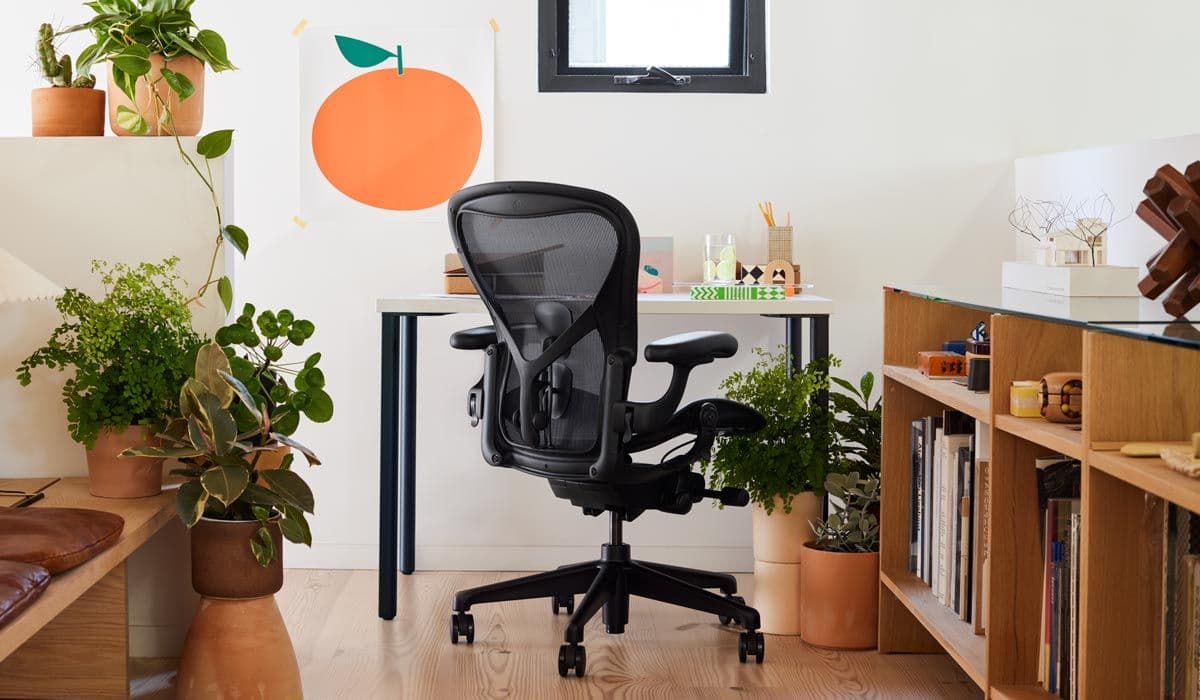
Wired's 2026 round-up calls the Aeron Remastered "the original mesh chair, still the best," and for buttock pain the mesh story matters: there is no foam to compress, so pressure distributes across the suspension instead of concentrating under the sit bones. Add the PostureFit SL pad and you get pelvic-stabilizing support comparable to (though not as configurable as) the Anthros.
Sizing matters more on the Aeron than any other chair on this list — get Size B for most adults; Size A and C are not interchangeable. If you run hot or live in a humid climate, this is your pick.
4. Humanscale Freedom — Best self-adjusting recline
The Freedom uses a counter-balanced recline that responds to your body weight without a tension knob. For buttock pain that flares with static sitting, the lower-friction recline encourages micro-shifts every few minutes, which is exactly what pressure-injury research says relieves ischial loading. Wirecutter and Wired both place Humanscale near the top for adjustment-free comfort.
5. CoreChair — Best active sitting for piriformis
The Google AI Overview specifically calls out the CoreChair for buttock pain, and the mechanism is unusual: the base allows up to 14° of pelvic motion in any direction, so the sit bones never load the same point for more than a minute. Patients with chronic piriformis irritation often tolerate the CoreChair when they cannot tolerate a fixed seat. Caveat — it has a learning curve; budget two weeks.
6. Branch Ergonomic Chair — Best budget
Wired's 2026 review names the Branch Ergonomic Chair as the best starting point on a tight budget. At $359 it is not in the same biomechanical class as the Anthros or the Leap, but it has the two non-negotiables: adjustable seat depth and adjustable lumbar height. Pair it with a Cushion Lab pressure-relief seat cushion and you can buy yourself 18–24 months while you save for one of the chairs above.
What to look for if none of these fit your budget or body
If you are shopping outside this list, four features are non-negotiable for buttock pain, in priority order:
- Adjustable seat depth. You need 1–2 fingers behind the knee. This is the single biggest piriformis fix.
- Pelvic / lumbar support. Without it, the pelvis rotates backward and the sit bones jam into the seat front edge.
- Pressure-mapped seat material. High-density cold-cure foam, gel-infused foam, or suspension mesh — not generic polyurethane.
- Free recline / dynamic seat. Anything that gets the pelvis moving every few minutes.
If the chair is fine but pain persists, the second-line interventions are a sit-stand desk schedule (50/10), a piriformis stretch protocol, and — if symptoms are sharp and radiating — a clinical eval to rule out true sciatica.
FAQ
What chair do chiropractors and PTs actually recommend for buttock pain?
In my own clinic the default recommendation is the Steelcase Leap V2 because the seat-pan slider and back tension are easy to dial in for most body sizes. For patients with measured pressure issues or piriformis syndrome, the Anthros or CoreChair are the next step up.
Is mesh or foam better for sit-bone pain?
Both can work. Mesh wins if you bottom-out foam or run hot — it spreads pressure across the suspension. High-density cold-cure foam (Steelcase, Humanscale) wins if you prefer a feel that holds shape. Generic polyurethane foam is the option to avoid; it compresses unevenly under the sit bones.
Why do my buttocks ache so much after sitting on a hard chair?
On a hard, flat seat your body weight concentrates on roughly two square inches under each ischial tuberosity. The localized PSI exceeds capillary closing pressure, soft tissue ischemia begins, and pain follows within 30–60 minutes. A pressure-mapped seat or a dedicated pressure-relief cushion redistributes that load over a much larger surface area.
Can a seat cushion fix the problem without buying a new chair?
Sometimes — for mild cases or as a stopgap. A Cushion Lab or Purple seat cushion on a generic office chair can drop peak pressure meaningfully. But cushions cannot fix seat-pan depth or pelvic tilt, which are the real drivers of piriformis pain. If pain is recurring, the chair is the better investment.
Need help picking?
Tell us your height, weight, and where the pain sits, and we will narrow this list to the one chair worth your money.
Written by
Dr. Lena Park, DPTDoctor of Physical Therapy and lead reviewer at Ergoprise. Specializes in workplace posture, cervical-spine load, and the biomechanics of seated work.
Share:
Related Posts
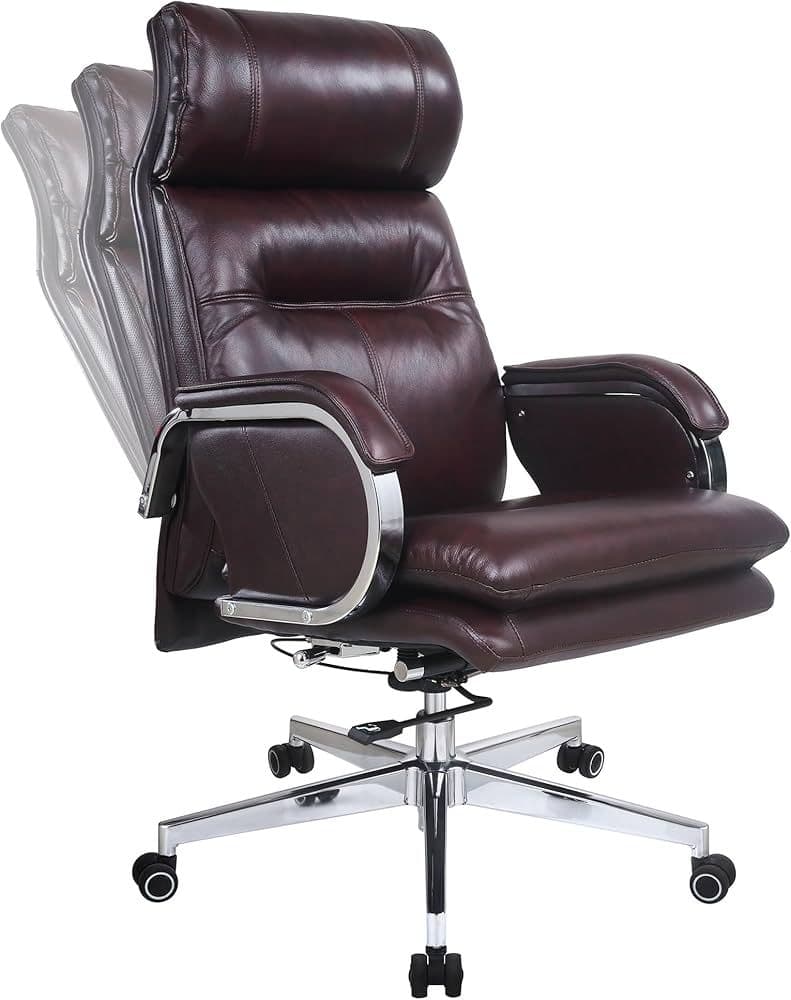
5 Best Genuine Leather Office Chairs in 2026 (Top-Grain & Full-Grain Only)
A clinical take on real leather office chairs — top-grain and full-grain only, ranked by ergonomic frame, leather grade, and 10-year durability.

Best Office Chairs for Coccyx Pain: An OT's 2026 Buying Guide
If sitting flares your tailbone, the chair matters more than the cushion on top of it. Here's the OT-led shortlist of office chairs that actually unload the coccyx.
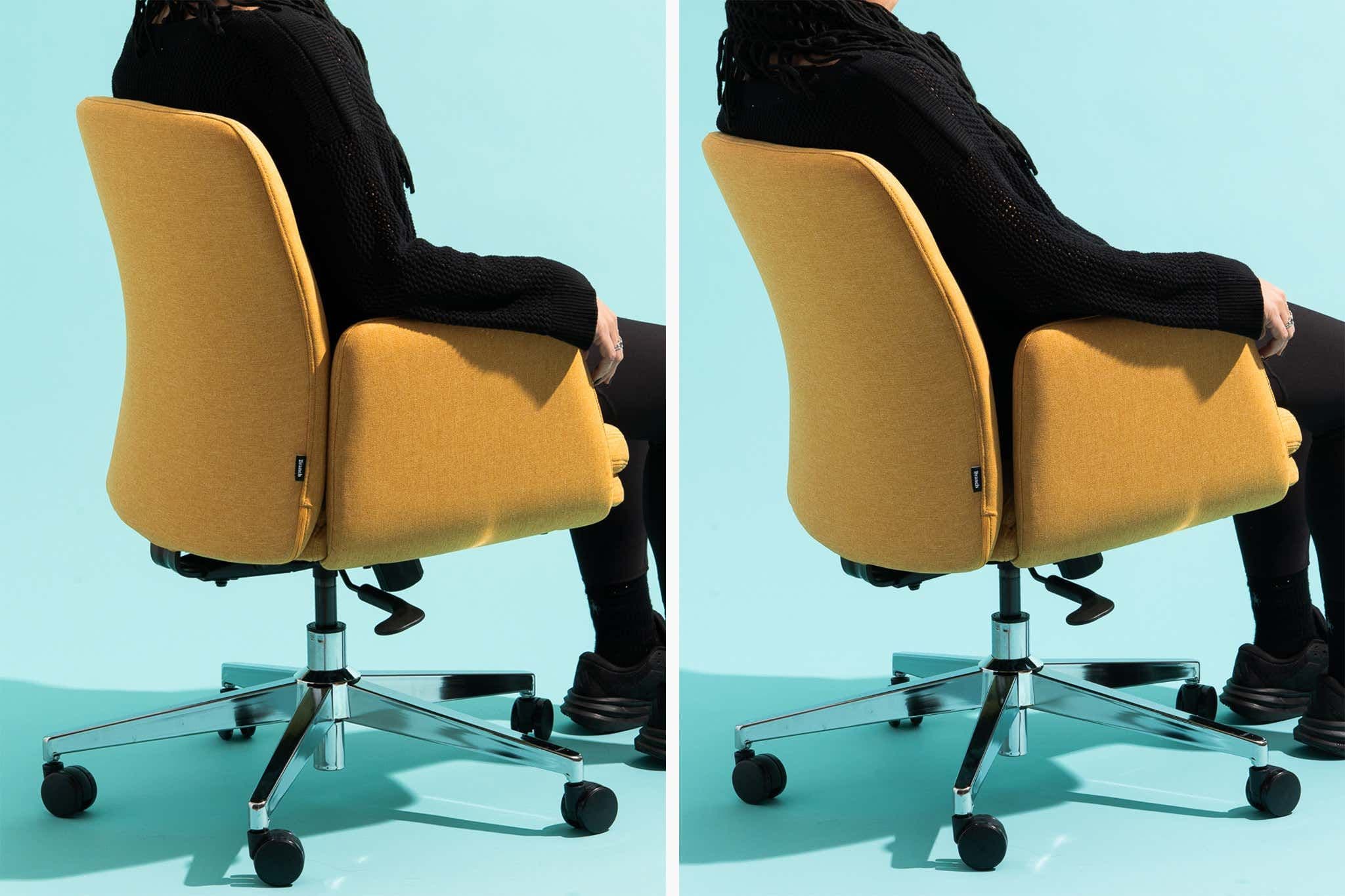
The Best Office Chairs for Long Hours, Tested by an Ergonomist
We sat in seven ergonomic chairs for 8+ hour workdays. Here is what survived — from a Steelcase Gesture down to a $480 sleeper pick.