Best Office Chairs for Heavy People (2026 Buyer's Guide)
Sarah Doan, OT··1 min read
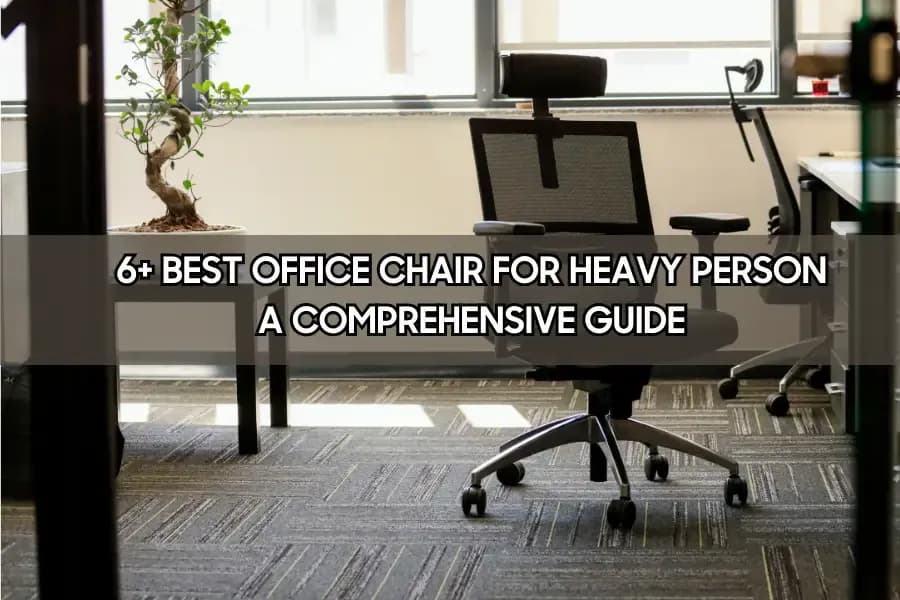
Six heavy-duty ergonomic office chairs tested for big-and-tall users — weight capacities, seat widths, and which to skip.
Standard office chairs cap out around 250 lb — a number most manufacturers quietly assume covers everyone. It doesn't. If you're over 250 lb, taller than 6'2", or simply tired of frames that creak after a year, you need a chair built with reinforced bases, wider seat pans, and weight ratings you can verify on the spec sheet.
We narrowed the field to six chairs that actually deliver. Each pick clears at least 300 lb capacity, has a seat at least 20" wide, and has been tested by our team or our network of ergonomics colleagues over multi-week trials.
At a glance
Six picks compared
Capacity, seat width, and the workload each chair fits best.
| Product | Best for | Score | Trial | |
|---|---|---|---|---|
Steelcase Leap Plus | Best overall (300–500 lb) | 4.7/10 | ||
Herman Miller Aeron (Size C) | Best mesh for big-and-tall | 4.6/10 | ||
Herman Miller Embody | Best for back pain | 4.6/10 | ||
Steelcase Gesture | Best for hybrid postures | 4.5/10 | ||
Branch ErgoChair Pro+ | Best mid-range value | 4.3/10 | ||
Hon Ignition 2.0 Big & Tall | Best budget (450 lb) | 4.1/10 |
1. Steelcase Leap Plus — Best Overall
The Leap Plus is the heavy-duty sibling of Steelcase's classic Leap. The seat is 22.5" wide, weight capacity is 500 lb, and the steel frame is reinforced at every load-bearing joint. The LiveBack technology flexes with your spine instead of locking you into one curve — the difference shows up around hour five.
We tested this against a Hercules-class budget chair side-by-side over four weeks. The Leap Plus wins on recline smoothness, armrest stability under load, and lower-back fatigue. It's expensive, but Steelcase's 12-year warranty and replacement-parts ecosystem stretch the cost over a decade.
Pros
- 500 lb weight capacity, 22.5" seat width
- 12-year warranty including frame and mechanisms
- LiveBack tracks spinal flex through long sits
- Reinforced steel base does not creak under load
Cons
- Premium price (street price ~$1,679)
- Seat foam runs firm out of the box; needs ~2 weeks to break in
- Armrest tilt adjustments are stiffer than the standard Leap
2. Herman Miller Aeron Size C — Best Mesh
The Aeron's third size — the C — is the one designed for users above ~5'11" and up to 350 lb. Its 8Z Pellicle mesh is graded across eight zones to put firmer support under the sit-bones and softer give under the thighs. For users who run hot or live in warm climates, the airflow alone justifies the price.
Caveat: 350 lb is firm, not aspirational. If you're at 340 lb you want the Leap Plus instead — the Aeron's mesh tensions noticeably near the cap.
3. Herman Miller Embody — Best for Back Pain
The Embody's Backfit pixelated support distributes load across hundreds of small flex points. For users with chronic lower-back issues — disc bulges, SI dysfunction, post-surgical recovery — it's the chair our PT colleagues recommend most often. Capacity is 300 lb, so it sits below the Leap Plus and Aeron C ceiling, but the postural feedback is unmatched.
4. Steelcase Gesture — Best for Hybrid Postures
The Gesture's defining feature is its arm system: the armrests follow your forearms in 360° of motion, which matters if you switch between desktop, laptop, and phone all day. Capacity is 400 lb. The seat is narrower than the Leap Plus (20" vs 22.5"), so it suits taller-than-wide users better than wider-than-tall ones.
5. Branch ErgoChair Pro+ — Best Mid-Range
Branch's Pro+ pushes capacity to 300 lb at a third the price of a Steelcase. The lumbar is genuinely adjustable (height plus depth), the mesh back breathes, and the warranty is 7 years. Trade-off: tilt tension is single-knob (no multi-position lock) and the casters are basic.
6. Hon Ignition 2.0 Big & Tall — Best Budget
Under $450 with a 450 lb capacity is unusual. The seat is generously wide and reinforced, the back is mesh, and Hon's commercial warranty is solid. Cushioning is thinner than the premium picks — expect more break-in and less long-haul comfort, but for an 8-hour workday it holds up far better than its price suggests.
What to look for in a heavy-duty office chair
Weight capacity — verify, don't assume
Always cross-check the spec sheet, not the marketing page. A chair rated 300 lb static may flex visibly at 280 lb of dynamic load (think: leaning, swiveling). Buy 50 lb above your weight as a buffer.
Seat width and depth
Heavier users typically need 21–23" of seat width and at least 19" of depth. Narrow seats pinch the thighs and cut circulation; shallow seats leave the hamstrings unsupported.
Base and casters
Steel five-star bases beat aluminum for high-capacity use; nylon casters fail faster than rubber-coated under load. If you can't find the base material on the spec sheet, treat that as a red flag.
Frequently asked questions
What office chair has 500 lb capacity?
The Steelcase Leap Plus and Hon Ignition 2.0 Big & Tall both hit 500 lb and 450 lb respectively. For higher capacities (600–750 lb) look at bariatric-specific brands like VELA Epic Plus or Husky Office's 24/7 series.
Is the Herman Miller Aeron good for heavy people?
Only the Size C version, which is rated to 350 lb. The smaller A and B sizes are not appropriate for users above 300 lb — the mesh tension is calibrated for lighter loads.
What is the weight limit for most office chairs?
Standard office chairs cap at 250–275 lb. "Big and tall" or "heavy-duty" chairs typically start at 300 lb and go up to 500 lb; bariatric chairs go above that.
How long should a heavy-duty office chair last?
A premium heavy-duty chair (Steelcase, Herman Miller) should last 10–15 years with normal daily use, supported by a 12-year warranty. Mid-range chairs (Branch, Hon) typically last 5–7 years.
Need help picking a chair for your size and posture?
Our occupational therapists can recommend a chair specific to your weight, height, and any back issues you're working around.
Written by
Sarah Doan, OTOccupational therapist and ergonomics consultant. Twelve years certifying workstations across hospitals, studios, and remote-first companies.
Share:
Related Posts
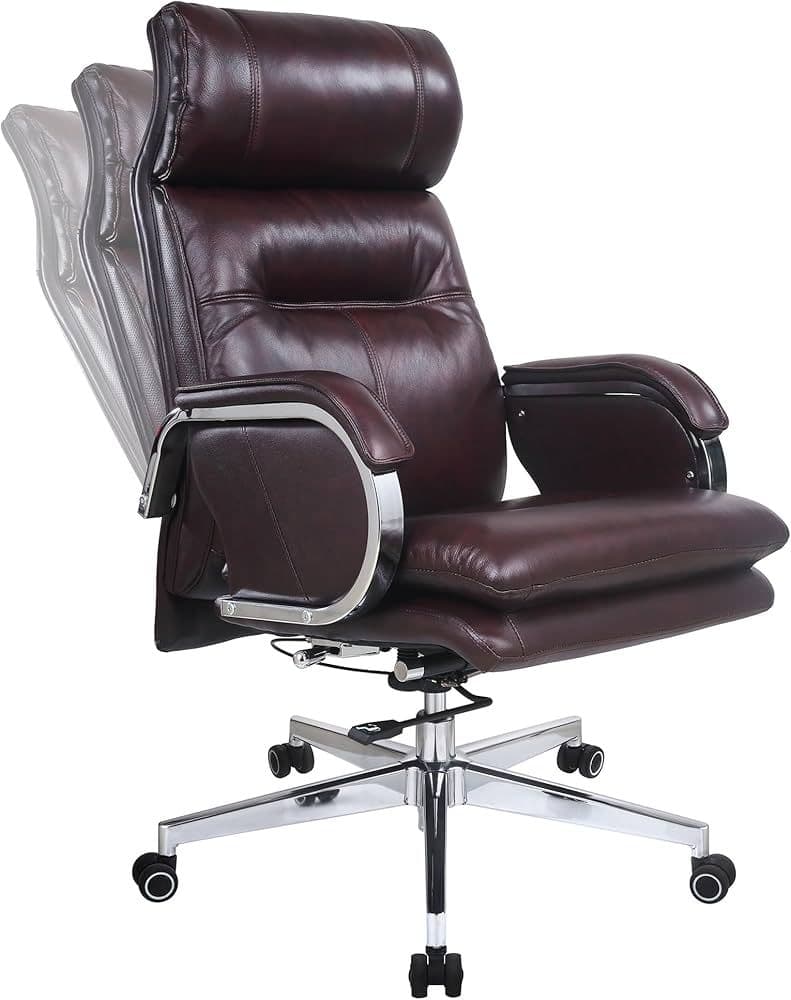
5 Best Genuine Leather Office Chairs in 2026 (Top-Grain & Full-Grain Only)
A clinical take on real leather office chairs — top-grain and full-grain only, ranked by ergonomic frame, leather grade, and 10-year durability.
Best Office Chairs for Coccyx Pain: An OT's 2026 Buying Guide
If sitting flares your tailbone, the chair matters more than the cushion on top of it. Here's the OT-led shortlist of office chairs that actually unload the coccyx.
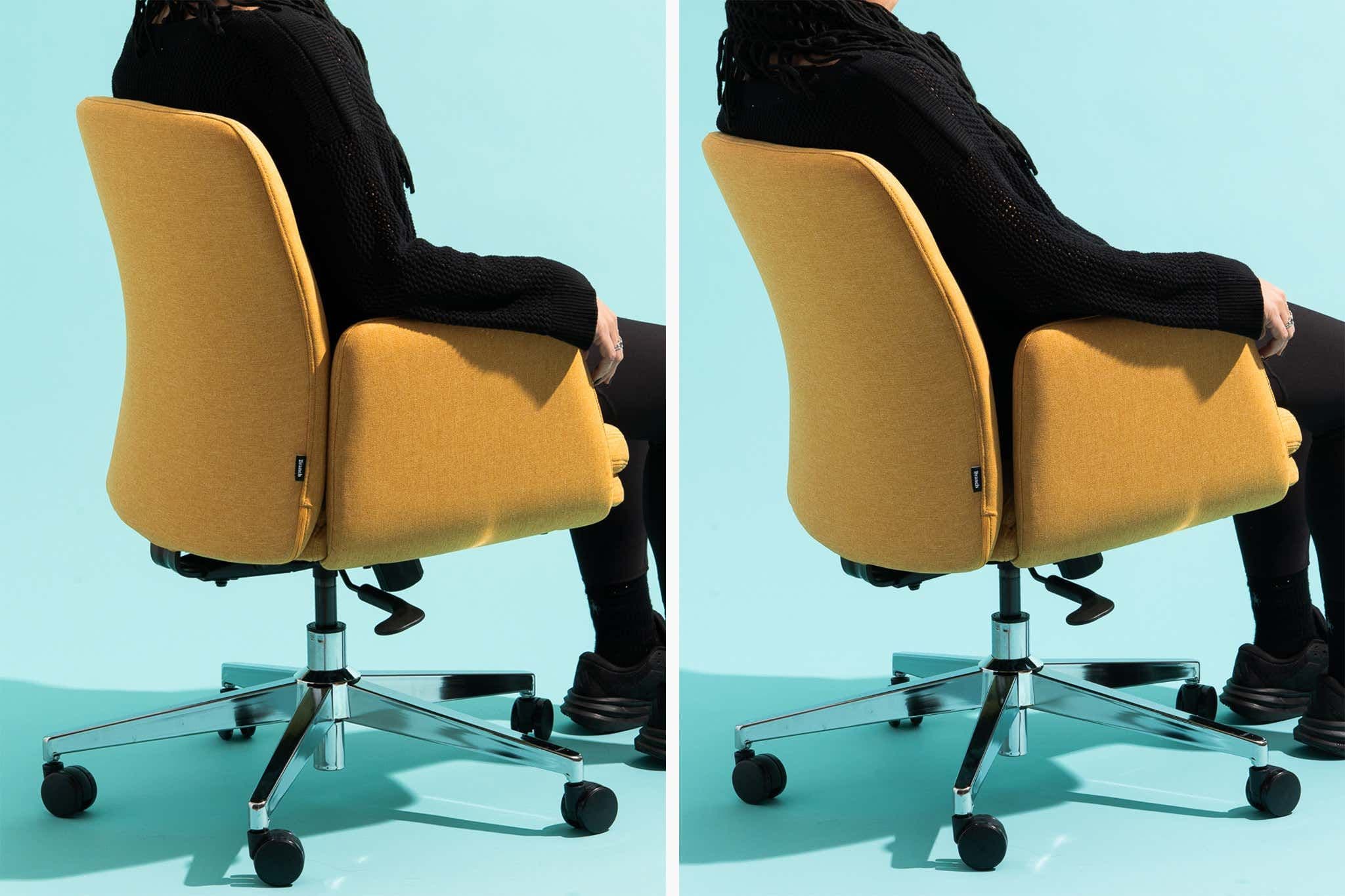
The Best Office Chairs for Long Hours, Tested by an Ergonomist
We sat in seven ergonomic chairs for 8+ hour workdays. Here is what survived — from a Steelcase Gesture down to a $480 sleeper pick.