
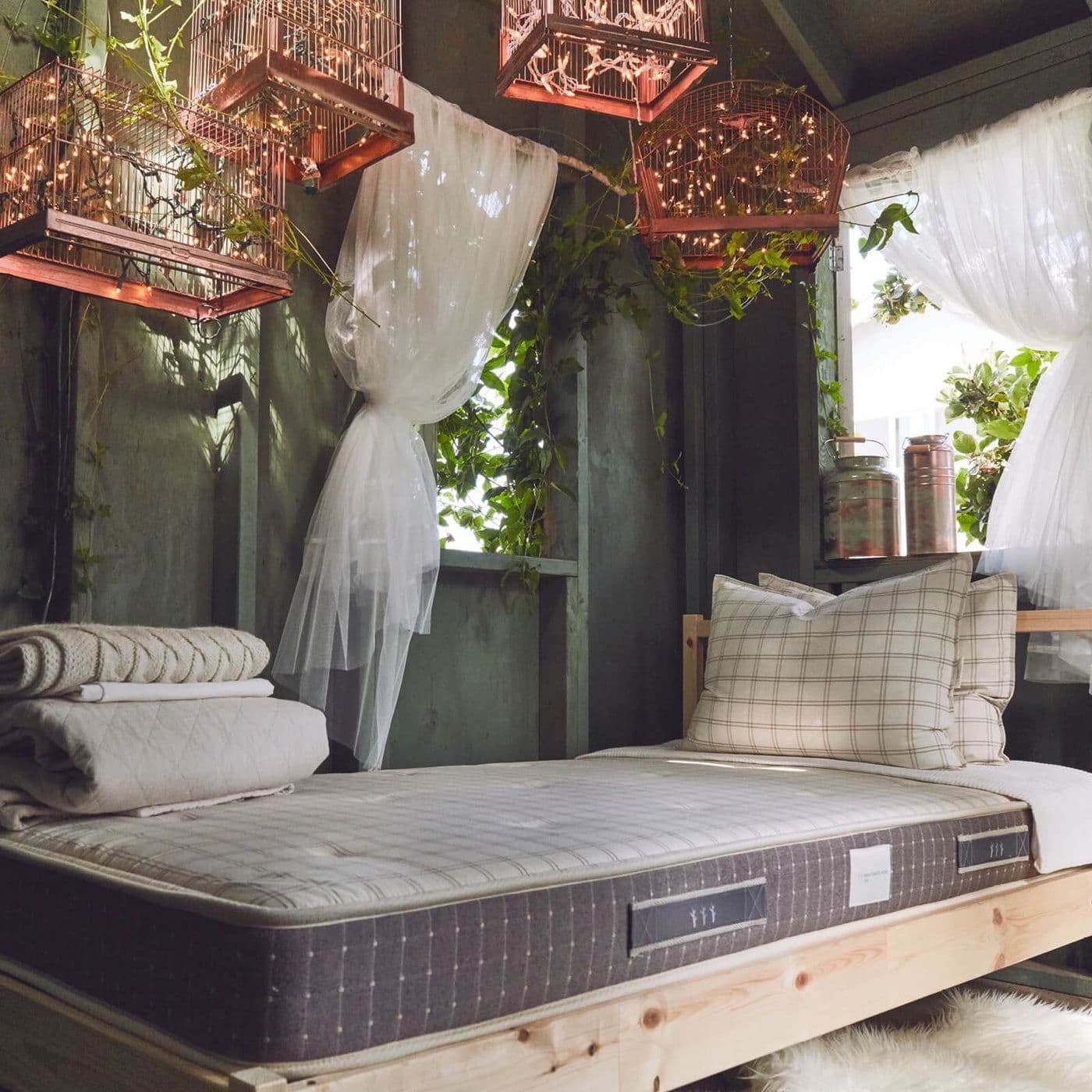
A 2026 guide to the best 6-inch mattresses for bunk beds, trundles, RVs, dorms, and guest rooms — with consensus picks, who they fit, and what to skip.
Six-inch mattresses are the unsung workhorses of compact sleep — built for bunk beds, trundles, RVs, dorm lofts, and guest rooms where a standard 10- to 12-inch profile simply won't fit. They are firmer by design (a thinner profile must push back harder so you don't bottom out on the slats), lighter to flip and move, and a fraction of the price of full-size beds.
This 2026 list is built on the current SERP consensus — the picks repeatedly cited by editorial reviewers and Google's AI Overview — not a single brand catalog. Each entry below names who it fits, who should size up, and where it falls short.
Affiliate disclosure: when you buy through links on Banner Mattress Online we may earn a commission at no extra cost to you. Picks are chosen on merit, not payout.
1. PlushBeds MobilePlush 6-Inch RV Mattress — Best for RVs. Custom RV sizes, gel-infused memory foam, 100-night trial.
2. Brooklyn Bedding Dreamfoam Essential 6" — Best Versatile. Made-to-order in the US, twin through cal king, 120-night trial.
3. Lucid 6-Inch Gel Memory Foam — Best Budget Foam. Sub-$200, CertiPUR-US certified, available everywhere.
4. Linenspa 6-Inch Innerspring — Best Bouncy Feel. Cool, breathable Bonnell coils for kids who hate foam.
5. Brentwood Home Juniper Kids 6" — Best for Kids. Greenguard Gold certified, 1-year trial, 10-year warranty.
PlushBeds has been the consensus 6-inch RV winner across editorial 2025-2026 round-ups, finishing as best overall in the Dweva ten-mattress comparison. The MobilePlush combines a CertiPUR-US gel-memory-foam comfort layer with a high-density support core sized specifically for short-queen, RV-king, and other non-standard frames.
Steady support for back and stomach sleepers up to roughly 200 lbs, decent cooling thanks to gel infusion, and packaging built to survive being wedged into a Class-C bedroom. Side sleepers over 180 lbs will still find it firm — that's the trade-off for not bottoming out on a slat platform.
Brooklyn Bedding's Dreamfoam Essential is the SERP's most-cited safe pick for unusual frames — it ships in a wider size range than almost any competitor, including odd bunk and trundle dimensions. The build is a simple gel-memory-foam over high-density poly base, made-to-order in the US, with a firm-leaning feel that holds up under daily use better than $99 Amazon foam.
Pick this if you have an off-spec frame or want a no-drama daily-driver for a guest bedroom.
The Lucid 6" is the cheap, predictable pick the AI Overview and big-box reviewers consistently flag as the budget option that doesn't immediately fall apart. Two inches of gel-infused memory foam sit on top of a four-inch high-density poly base, and the whole thing typically retails under $200 in twin or full.
It's a strong fit for kids' rooms, occasional guest beds, and college lofts — situations where you'll happily replace it in three to four years rather than expect a decade of service.
If your sleeper hates the dead, sinky feel of memory foam, the Linenspa innerspring is the SERP's go-to alternative. A traditional Bonnell coil unit gives it the bouncy, airy feel kids and lightweight adults often prefer, and the open coil structure runs noticeably cooler than any 6-inch foam option.
It's firm enough to keep a kid from bottoming out on a bunk slat platform, and quiet enough that the squeaks won't wake a roommate.
Brentwood Home's Juniper Kids is the cleanest option on this list from a materials standpoint — Greenguard Gold certified for low chemical emissions, with a soft cotton-blend cover and CertiPUR-US foam. Made in California, backed by a 1-year trial and 10-year warranty, it's the pick for parents who want the room-air-quality story buttoned up.
The medium-firm feel suits kids from toddler-bed transition through tween years; once a child crosses ~120 lbs and starts side-sleeping seriously, plan to upgrade to an 8" or 10" model.
Picks have to appear in at least two editorial 6-inch round-ups (Sleepopolis, Dweva, Sleep Foundation, Sleep Advisor, NY Mag's Strategist) or be cited by Google's AI Overview alongside one editorial source. We exclude Reddit threads, Amazon best-seller lists, and brand-direct comparison pages from consensus — they're inputs, not verdicts. Each finalist is then sanity-checked for current 2026 availability, certification (CertiPUR-US at minimum), and trial-period length.
Firmness rating: aim for 6-7/10. Anything softer will pack out fast on a thin profile.
Certifications: CertiPUR-US (foam) and Greenguard Gold (kids' rooms) are the two that actually mean something.
Cover: washable or zip-off if a child or pet is sleeping on it.
Trial: under 30 days is a red flag — even budget brands now match a 30-day floor.
It depends on weight and sleep style. Adults under ~150 lbs who sleep on their back or stomach can do fine on a quality 6-inch mattress nightly. Side sleepers, anyone over 180 lbs, and people with back or hip pain should size up to 8 inches or more — a 6-inch profile can't cushion shoulder and hip pressure points well enough for nightly use.
Neither — it's a category. 6 to 8 inches is the right answer for children, lightweight adults, bunk beds, trundle beds, RVs, and guest rooms. It's the wrong answer for the primary bed of an average-weight adult side sleeper. Match the thickness to the use case.
Yes — most bunk beds have a stamped maximum mattress thickness (usually 6 to 8 inches) so the upper guard rail still extends above the sleep surface. Always check the bunk bed's manual; a too-thick mattress on a top bunk is a fall risk, not just a comfort issue.
Plan on 4 to 6 years for a quality 6-inch foam or hybrid in light-use scenarios (kids' room, guest bedroom). Heavy nightly use by an adult will compress the foam faster — closer to 3 years for budget options like the Lucid or Linenspa.
The Linenspa innerspring and the Brooklyn Bedding Dreamfoam Essential (firm option) are the two firmest mainstream picks. Both rate around 7/10 and are appropriate for back/stomach sleepers and bunk-bed setups where bottoming-out is a concern.
If you're outfitting a bunk, trundle, or guest room, the Brooklyn Bedding Dreamfoam Essential is the lowest-regret pick — it fits oddly-sized frames, ships fast, and holds its shape under real use. For RV builds, PlushBeds MobilePlush is the segment leader. For tight budgets, Lucid and Linenspa both perform above their price tag. And for a kid's bedroom where air quality matters, Brentwood Home's Juniper Kids is the cleanest option of the lot.

Written by
Banner Mattress EditorialThe Banner Mattress editorial team is a collective of sleep experts, mattress design researchers, production specialists, and industry veterans publishing independent reviews and sleep guidance since 2018. We've personally tested over 1,000 mattresses and 3,000+ pillows, sheets, and sleep accessories — every recommendation is based on hands-on evaluation in our review lab, not vendor talking points. Our work covers brand reviews (Saatva, Helix, Nectar, Purple, Tempurpedic, and more), buying guides by size and firmness, comparisons, and science-backed sleep health advice. Affiliate links may earn us a commission, but never influence which products we recommend.
 Best Mattresses
A 10-inch mattress is the sweet spot for petite-to-average sleepers, guest rooms, and platform beds. We break down the six 10-inch models that dominate 2026 expert testing — from the Leesa Original to budget pick Siena Signature — with who each suits, what to skip, and how to choose.
 Best Mattresses
Our editor-tested guide to the best 12-inch mattresses. Saatva Latex Hybrid leads for natural builds, DreamCloud for value hybrids, Casper Snow for hot sleepers, and Nectar for plush memory foam — chosen against current SERP consensus.
 Best Mattresses
A daybed mattress has to do two jobs: feel firm enough to sit on like a sofa and soft enough to actually sleep on. The right pick is usually a 6-to-8-inch, medium-firm twin built from foam, latex, or low-profile hybrid. Here are six options that hit that brief, plus the sizing, thickness, and material rules to know before you buy.